Want to be in the loop?
subscribe to
our notification
Business News
GOVERNMENT ALLAYS PROPERTY BUBBLE FEARS
The ministry's report said there were about 14,000 transactions in the first half of this year, more than double the figure of the same period last year.
He said the recovery was thanks to the Government's measures for tackling problems in the property market, together with the housing development strategy implemented in the years after the market crash in 2008.
However, he said speculation would be unavoidable during the recovery period, and that "it is important to tighten management to prevent overheated growth that would create a property bubble".
Preventing speculation required the joint efforts of relevant ministries and organisations, especially the banking sector's tight control over the credit flow into the property market.
Controlling credit
Looking back at the 2006-07 period, when easier credit was one of the factors that fuelled the property bubble, resulting in huge non-performing debts in the real estate sector when the bubble burst, experts said banks should tighten control over outstanding loan growth in this sector.
Tran Du Lich, a member of the National Monetary and Financial Policy Advisory Council, said the rising capital flow into the property market was a good sign.
However, banks must control the growth of outstanding loans in the real estate sector to avoid risks, he said.
Banks should select good projects to provide loans, he said.
The property sector has received increasing capital flows from banks, foreign direct investment (FDI) and overseas remittances from the beginning of this year.
Statistics of the State Bank of Viet Nam showed that as of the end of May, credit growth in the property sector was 10.89 per cent, nearly double the overall credit growth of the economy.
According to the Foreign Investment Agency under the Ministry of Planning and Investment, the property sector ranked second in attracting FDI in the first half of the year with a total of more than US$465 million, accounting for 8.5 per cent of the country's FDI.
The capital flow into the property sector was expected to rise as the central bank recently agreed to increase the credit growth targets for several commercial banks.
However, tight supervision of loans given to sectors with high risks such as the real estate sector was required.
Nguyen Van Duc, deputy director of Dat Lanh Real Estate Company, said it was important that the right money went to the right places.
The central bank at its press conference last month said the loans were mainly channelled into construction and completion of works, adding that it would continue to monitor credit flow into the real estate sector.
At the Government meeting in April, the Prime Minister said active measures should be taken to ensure healthy and sustainable development of the property market, together with preventing the return of a market bubble.
Source: VIR
Related News

INFRASTRUCTURE / CONSTRUCTION / LOGISTIC / PORT
VIỆT NAM-CAMBODIA TRADE GATHERS PACE TOWARDS $20 BILLION TARGET
Trade between Việt Nam and Cambodia continues to grow, remaining a bright spot and a key pillar of bilateral cooperation as the two countries aim to raise two-way trade to US$20 billion in the coming years. After setting a record of more than $11.3 billion last year, bilateral trade reached about $8.7 billion in the first eight months of this year, up 8.3 per cent year on year.
TECHNOLOGY
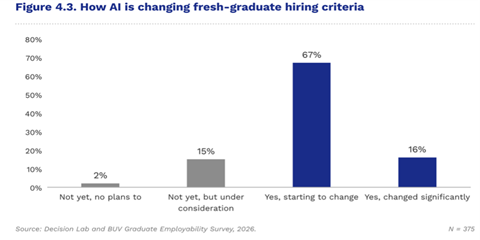
AI BEGINNING TO RESHAPE RECRUITMENT CRITERIA
Digital literacy is the only capability area in which fresh graduates meet employers’ expectations, according to a new report. Yet, it is also the standard rising fastest, as businesses increasingly expect new hires to use AI effectively in the workplace. Some 83 per cent of employers say AI has changed, or is beginning to change, their hiring criteria, while 94 per cent report higher expectations for digital and AI capabilities than they had two to three years ago.

INFRASTRUCTURE / CONSTRUCTION / LOGISTIC / PORT
ĐÀ NẴNG GREEN-LIGHTS US$105 MILLION THAI DEVELOPMENT DEAL
The central city has approved an investment proposal by Thailand’s WHA Group to develop infrastructure for the 400ha WHA Đà Nẵng Industrial Park project on two communes of Thăng Bình and Đồng Dương, with an investment of more than VNĐ2.7 trillion (US$105 million). The city said it approved WHA Industrial Development International's status as an investor in the project, which is expected to take place between 2027 and 2034.

VIETNAM ECONOMY INVESTMENT
MOBILE PHONE EXPORTS RISE 20% TO $51.8 BILLION IN FIRST NINE MONTHS
Exports of mobile phones and components rose 20 per cent year-on-year to nearly US$51.8 billion in the first nine months of 2026, with China, the US and Republic of Korea accounting for more than half of the total. Shipments to the three markets reached a combined $26.18 billion, or 50.6 per cent of total exports of the product group during the period, according to data from the Vietnam Department of Customs under the Ministry of Finance.

VIETNAM ECONOMY INVESTMENT
FRUIT AND VEGETABLE EXPORTS POISED TO HIT $10 BILLION IN 2026
Fruit and vegetable exports are on track to reach nearly US$10 billion in 2026, after rising 19.9 per cent year on year to nearly US$7.4 billion in the first nine months, driven by strong seasonal demand and abundant tropical fruit supplies. The Ministry of Agriculture and Environment said the growth reflected stronger international demand for fresh produce and processed agricultural products.
GARMENT / TEXTILE
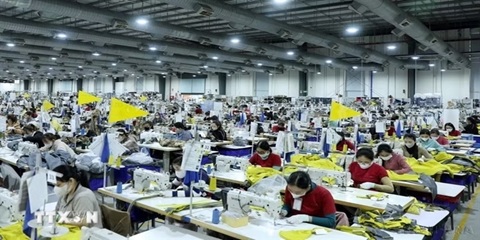
TEXTILE EXPORTS FACE DUAL CHALLENGES OF SUSTAINING ORDERS AND BOOSTING EFFICIENCY AMID GROWING COMPETITION
Data shows that the textile and garment sector maintained its growth momentum in the first nine months of this year. The industry's total export turnover reached an estimated US$35.721 billion in the first nine months of this year, up 3.3 per cent year-on-year. Despite posting encouraging export figures, Vietnamese textile and garment enterprises continue to navigate unpredictable market variables.
Events Sponsors






















